Radon mitigation system installation in Arvada
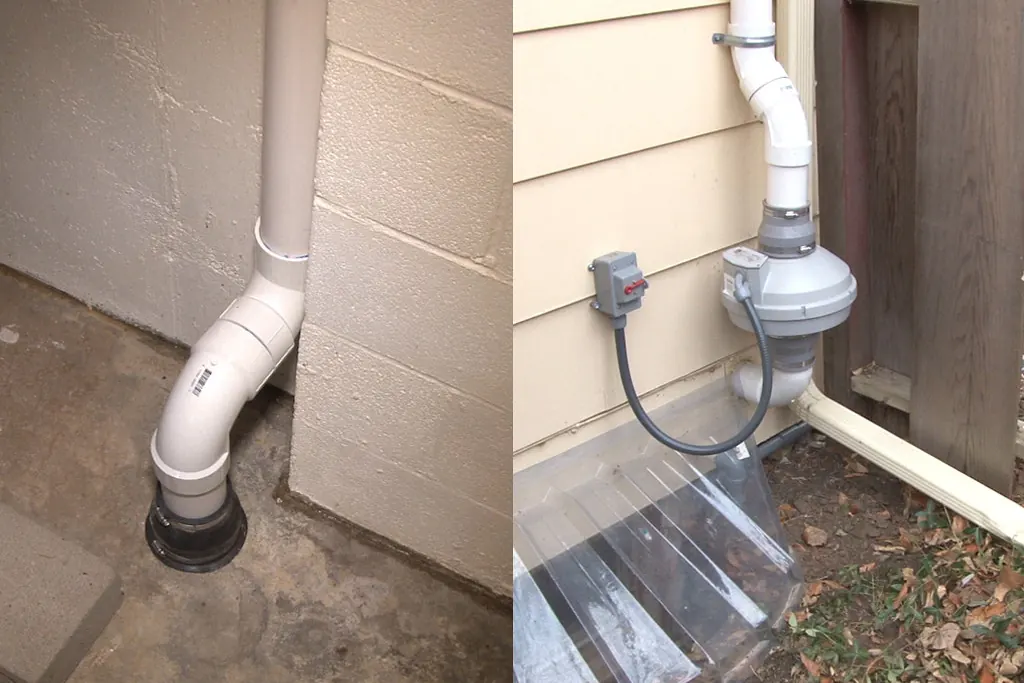
The standard fix for basements and slab floors: a pipe under the slab, a fan, and a vent above the roof.
What it usually costs
- Typical sub-slab system in the Denver metro: about $1,000 to $2,500
- Some cost guides quote up to about $3,500 for complex homes: multiple slabs, finished basements, or interior routing through the house
- What moves the price: number of suction points, finished vs unfinished space, interior vs exterior pipe, sealing work and permit fees
Ranges are rough Denver-metro figures gathered from public cost guides and are only a starting point. Your contractor's written quote is the number that counts.
How sub-slab depressurization works
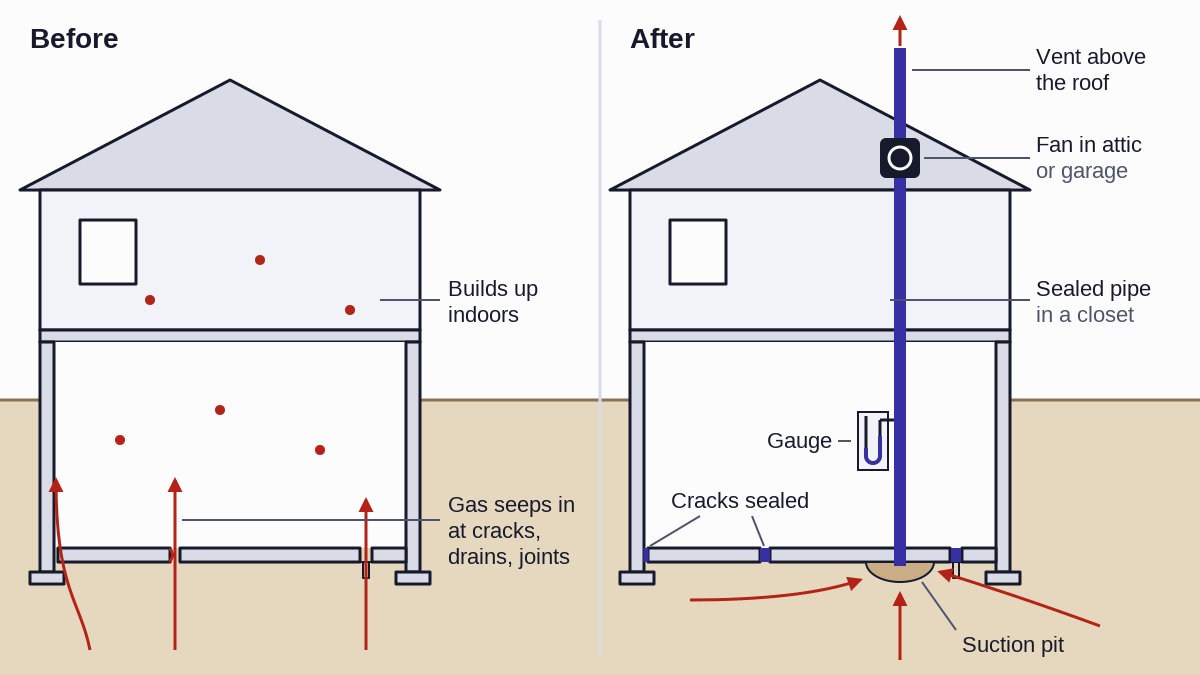
The installer drills a hole through the basement floor or slab, digs out a small pit underneath, and runs a sealed pipe from there to a fan. The fan keeps the space under the floor at slightly lower pressure than the house, so soil gas gets pulled out and vented above the roof instead of seeping in. Most homes need one suction point; some need two or more if the slab is split or the soil under it is tight.
Inside or outside the house?
- Exterior routing runs the pipe out through the rim joist and up the outside wall. Simpler and usually cheaper, but visible, and some HOAs have rules about how it looks.
- Interior routing runs the pipe up through a closet or chase into the attic, with the fan in the attic or garage. Cleaner looking and quieter at the wall, more labor, and it needs a plan in a finished home.
What a good install includes
- Sealing major cracks, floor drains and openings at the slab
- A sealed lid on any sump pit
- A pressure gauge (manometer) on the pipe so you can see the system is working
- A label on the system with installer information
- A post-mitigation test, usually at least 24 hours after the system starts
What to ask
- What is your Colorado radon mitigation license number?
- Where will the pipe run, and where will the fan sit?
- How many suction points, and did you do a diagnostic test to decide?
- Does the price include the follow-up test, and what happens if the number is still high?
- Does my city require a permit, and will you pull it?
Where this service is available
Arvada, Olde Town and central Arvada, Northwest Arvada and Candelas, Westminster, Wheat Ridge, Broomfield, Golden, Lakewood.
Get a free quote
Takes about a minute. Questions? Email [email protected].
Related services
Radon testing
Find out your actual number before anyone sells you a system. DIY kits work; a licensed test helps when a sale or a dispute is involved.
Crawl space radon mitigation
For tri-levels and homes with dirt or gravel crawl spaces: a sealed plastic membrane over the ground with a fan pulling from underneath.
Radon for home buyers and sellers
Testing during the inspection period, what a high number means for the deal, and getting a system in before closing.
System check and fan replacement
For homes that already have a system: a dead fan, a flat gauge, a noisy motor, or a retest that came back high.
New construction and passive systems
Many newer homes have a passive radon pipe built in. If the test is still high, adding a fan is often the simplest fix.