Crawl space radon mitigation in Arvada
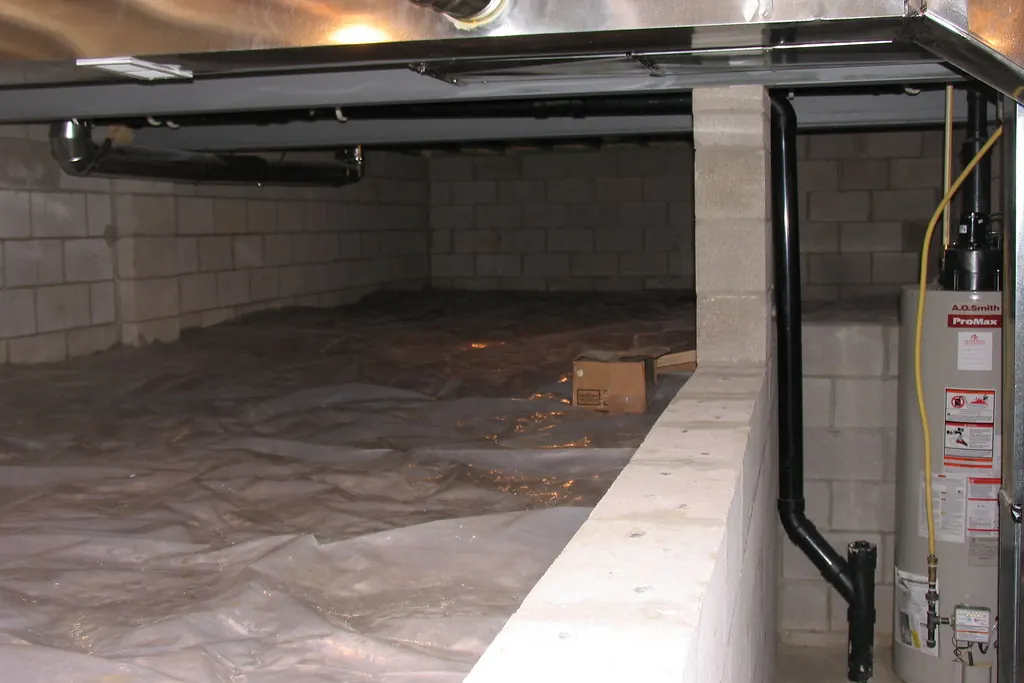
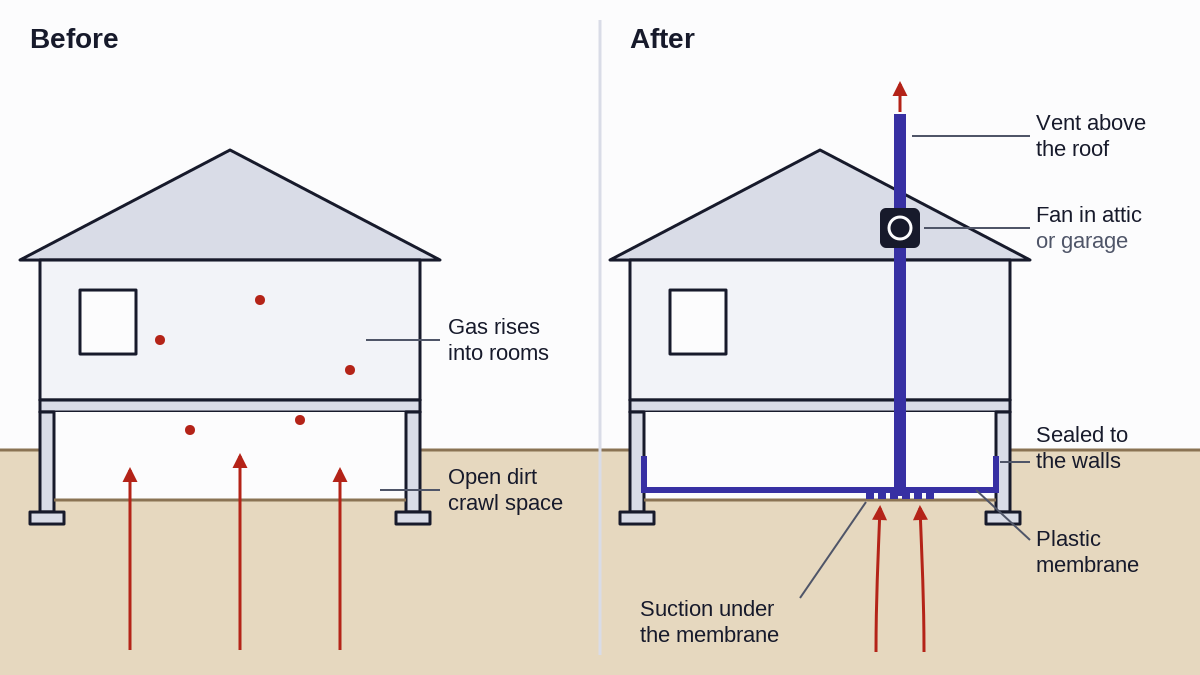
For tri-levels and homes with dirt or gravel crawl spaces: a sealed plastic membrane over the ground with a fan pulling from underneath.
What it usually costs
- Crawl space membrane system: often more than a basic sub-slab job, commonly about $1,500 to $3,500 depending on size and access
- Homes with a crawl space plus a basement or slab often need both methods tied together, which adds cost
- Heavier membranes and sealing to the walls cost more but last longer and hold up to storage and foot traffic
Ranges are rough Denver-metro figures gathered from public cost guides and are only a starting point. Your contractor's written quote is the number that counts.
Why crawl spaces are different
There is no concrete floor to drill through. Instead, the installer lays a heavy plastic sheet over the dirt or gravel, seals it at the seams and up the foundation walls, and runs a pipe from under the sheet to a fan. This is called sub-membrane depressurization.
Common in tri-levels
A lot of 1970s tri-levels and bi-levels around Arvada sit partly on a slab or basement and partly over a crawl space. A good contractor treats the house as one system, often tying a sub-slab point and a crawl space membrane into the same fan.
Things that matter here
- How well the membrane is sealed at the walls and around piers
- Whether you still need to get into the crawl space for plumbing or storage
- What happens to the vents and any existing vapor barrier
- Whether the crawl space has a sump or standing water
What to ask
- What thickness of membrane, and is it sealed to the foundation walls?
- Will the system also cover the slab or basement section of the house?
- Can I still use the crawl space for storage without damaging the membrane?
- Is the follow-up test included?
Where this service is available
Arvada, Olde Town and central Arvada, Northwest Arvada and Candelas, Westminster, Wheat Ridge, Broomfield, Golden, Lakewood.
Get a free quote
Takes about a minute. Questions? Email [email protected].
Related services
Radon testing
Find out your actual number before anyone sells you a system. DIY kits work; a licensed test helps when a sale or a dispute is involved.
Sub-slab radon system install
The standard fix for basements and slab floors: a pipe under the slab, a fan, and a vent above the roof.
Radon for home buyers and sellers
Testing during the inspection period, what a high number means for the deal, and getting a system in before closing.
System check and fan replacement
For homes that already have a system: a dead fan, a flat gauge, a noisy motor, or a retest that came back high.
New construction and passive systems
Many newer homes have a passive radon pipe built in. If the test is still high, adding a fan is often the simplest fix.